
Solana ecosystem 2026 budget
Solana’s 2026 ecosystem has shifted from speculative hype to tangible utility. Real-world assets (RWAs) on the network now exceed $3.73 billion, and payments infrastructure supports over 330,000 merchants. This scale demands tools that can handle high-frequency data without lag. Solana Radar fits this need by providing real-time alpha, allowing you to track these developments as they happen rather than after the fact.
When budgeting for tools in this environment, prioritize speed and accuracy over cheap, fragmented data sources. A slow dashboard misses the window for high-impact trades. Solana Radar’s architecture is built for this volatility, offering a single pane of glass for tokenized equities, stablecoin settlements, and DeFi growth metrics.
The tradeoff is clear: you pay for precision. While free aggregators often lag or miss niche signals, Solana Radar delivers the granular data needed to plan around the expanded ecosystem. For serious participants, this efficiency is not an expense but a necessary infrastructure cost. The following recommendations highlight essential hardware and software setups that complement this real-time workflow, ensuring you never miss a critical market move.
Shortlist real options
Use this section to make the Solana's Ecosystem decision easier to compare in real life, not just on paper. Start with the reader's actual constraint, then separate must-have requirements from details that are merely nice to have. A practical choice should survive normal use, maintenance, timing, and budget. If a recommendation only works in an ideal situation, call that out plainly and give the reader a fallback path.
| Factor | What to check | Why it matters |
|---|---|---|
| Fit | Match the option to the primary use case. | A good deal still fails if it does not fit the job. |
| Condition | Verify age, wear, and service history. | Hidden condition issues erase upfront savings. |
| Cost | Compare purchase price with likely upkeep. | The cheapest option is not always the lowest-cost option. |
Inspect the expensive parts
Solana’s 2026 ecosystem is expanding rapidly, with real-world assets hitting $3.73 billion and payments reaching 330,000+ merchants. But high throughput comes with specific failure modes. Before you commit capital or integrate, check these four expensive points where things usually break.
Don’t trust average latency. Check how your RPC provider handles peak TPS. A 200ms delay during a mint or swap can mean a failed transaction or front-running. Use Solana Radar to monitor real-time node health before executing large trades.
Maximal Extractable Value (MEV) bots are aggressive on Solana. If your DEX integration doesn’t use private transaction relays or Jito bundles, you’re leaving money on the table. Verify that your swap routes are shielded from front-running.
Many Solana programs are upgradeable. Check if the contract owner can change logic without a timelock. If a protocol like Jupiter or Drift has a multisig wallet with no delay, a malicious update could drain funds. Always verify the upgrade authority status.
With $3B in RWAs and growing stablecoin settlement, counterparty risk matters. Don’t assume all stablecoins are equal. Check the reserve proof frequency and the issuer’s legal structure. Stick to USD-pegged assets with transparent, audited reserves.
These checks aren’t just for big institutions. If you’re trading or holding, skipping them is like driving without brakes. Use real-time data to see what’s happening now, not what happened last week.
Ownership Costs
A low entry price masks the hidden expenses of running a Solana node or validator. While the software itself is free, the infrastructure required to participate in the network demands consistent capital. This section breaks down the recurring costs that turn a cheap startup into a expensive long-term commitment.
Hardware Depreciation and Upgrades
Solana’s high throughput requires robust hardware, particularly fast NVMe storage and high-core-count CPUs. These components degrade under constant 24/7 write loads. You must budget for hardware replacement every two to three years. A system that performs well today may struggle with the expanding state size of the blockchain tomorrow. Treating hardware as a permanent asset rather than a consumable is a common mistake that leads to missed blocks and reduced rewards.
Bandwidth and Electricity
Network uptime is non-negotiable. Validators need symmetric, high-bandwidth connections with low latency. Residential internet plans often have data caps or asymmetric speeds that disqualify them from serious participation. Commercial-grade internet and dedicated power lines add significant monthly overhead. In regions with high electricity costs, these operational expenses can erode profit margins faster than transaction fees ever could. Always calculate your break-even point based on local utility rates, not average national figures.
Maintenance and Time
Software updates on Solana occur frequently. Missing a block producer upgrade can result in temporary slashing or missed rewards. You need a reliable monitoring system and a plan for remote access. If you are running a validator solo, your time is a hidden cost. One hour of troubleshooting per week adds up to significant unpaid labor. For most retail investors, the time spent maintaining infrastructure outweighs the potential yield, making staking through a reliable provider a more cost-effective choice.


As an Amazon Associate, we may earn from qualifying purchases.
Solana ecosystem 2026: what to check next
Investors are looking for concrete signals in the Solana ecosystem rather than vague promises. The network’s shift toward institutional-grade infrastructure and real-world asset tokenization provides a clearer path for growth than previous speculative cycles. Tools like Solana Radar help filter the noise from these structural developments.
How high could Solana go in 2026?
Price targets vary based on whether you view Solana as a high-throughput chain or foundational infrastructure. With real-world assets hitting $3.73 billion and payments expanding to 330,000+ merchants, the utility floor is rising. Most analysts project significant upside if institutional adoption continues to harden the network’s reliability.
Will Solana hit $200 again?
Reaching previous all-time highs depends on broader market liquidity and Solana’s ability to maintain low fees during peak congestion. The 2026 roadmap focuses on stability over pure speed, which supports sustained value accrual. While not guaranteed, the expanding DeFi and payment sectors provide fundamental support for higher valuations.
What are the top Solana projects with potential in 2026?
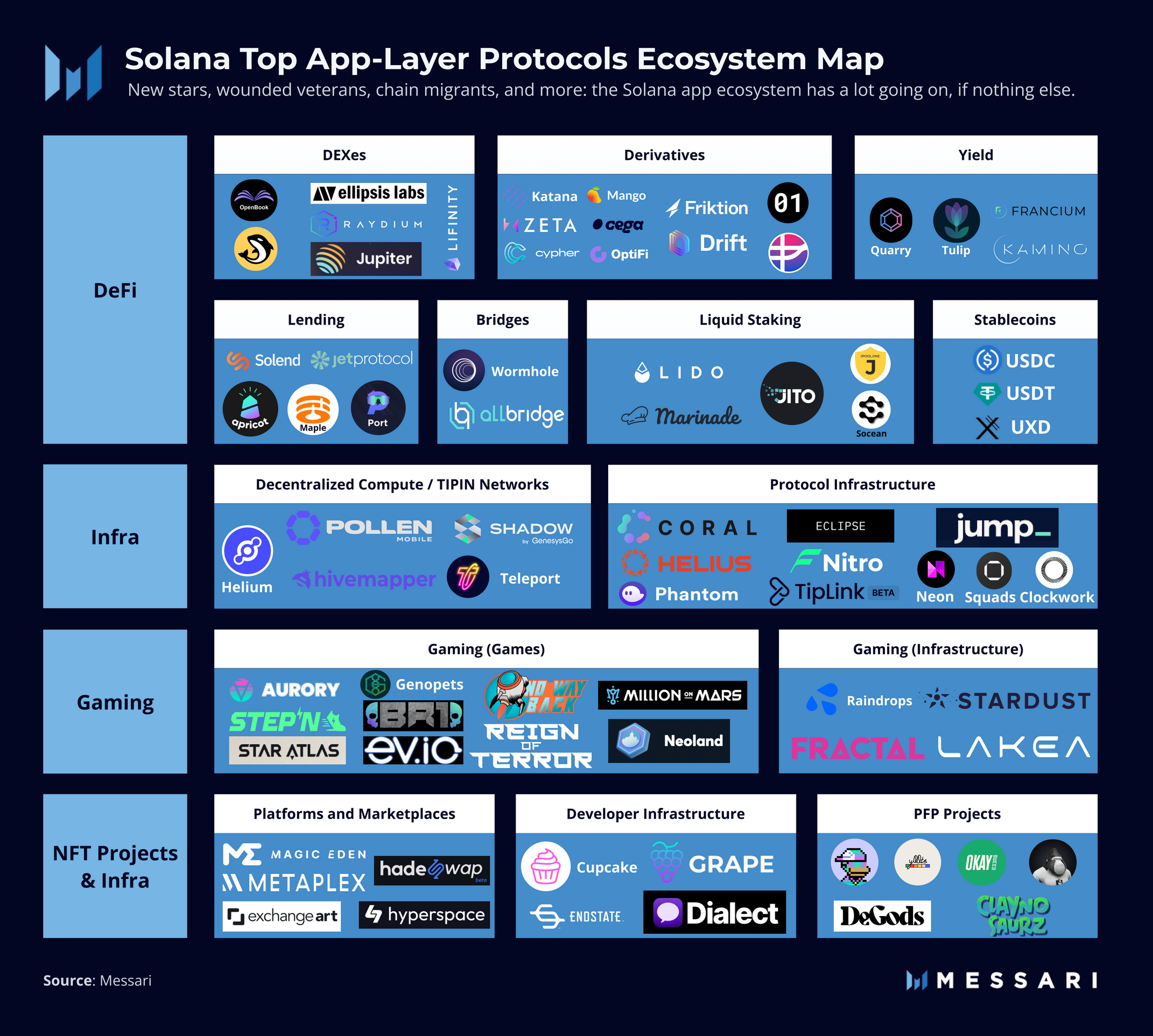
The ecosystem’s strongest projects span DeFi, infrastructure, and data. Jupiter (JUP) and Raydium (RAY) dominate liquidity aggregation. Drift (DRIFT) and Kamino (KMNO) lead in lending and derivatives. For infrastructure, Jito (JTO) and Pyth Network (PYTH) are critical for block production and real-time data. Helium (HNT) and Sanctum (CLOUD) represent growth in DePIN and liquid staking.
Which crypto will skyrocket in 2026?
While no asset is guaranteed to skyrocket, Solana’s ecosystem tokens are positioned for growth due to network effects. Projects with real revenue, such as Jupiter and Pyth, often outperform pure speculation. Monitoring on-chain volume and merchant adoption on Solana provides a more reliable indicator than generic market trends.
No comments yet. Be the first to share your thoughts!