
What Solana DePIN 2026 Means
Decentralized Physical Infrastructure Networks (DePIN) use blockchain incentives to coordinate the deployment and sharing of real-world hardware like WiFi hotspots, data storage, and computing power. Instead of a central corporation owning the assets, individuals contribute their own devices and earn tokens automatically through on-chain verification.
Among Layer 1 blockchains, Solana has emerged as the settlement layer of choice for DePIN protocols. This position is structural rather than accidental. The network’s high throughput and low transaction costs allow for the micro-transactions required to pay thousands of individual hardware contributors without eroding their rewards.
Solana DePIN 2026 represents the maturation of this model. As the ecosystem expands, the focus shifts from experimental testnets to production-grade infrastructure that competes with centralized cloud providers and telecom giants. The network’s architecture supports the massive volume of state updates and payments that physical infrastructure demands.
Leading Solana DePIN Projects
The Solana DePIN 2026 landscape is defined by protocols that have moved beyond experimental phases to generate measurable real-world utility. While the broader sector saw network revenue stabilize at approximately $2.4 million in early 2026, specific leaders have established dominant positions in their respective niches. These projects demonstrate how distributed hardware can effectively replace or augment traditional infrastructure.
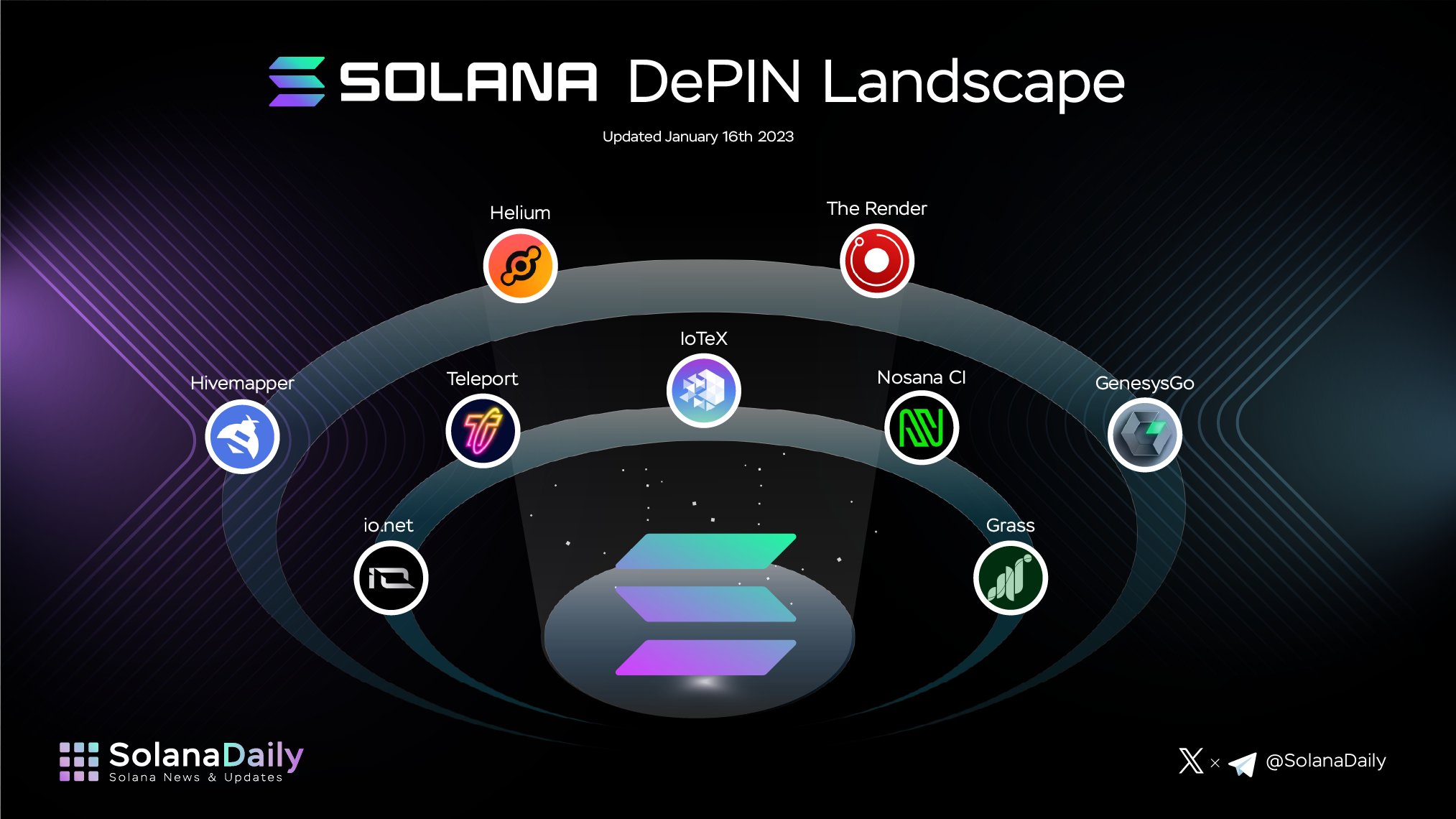
Helium: Decentralized Wireless Coverage
Helium remains the most recognizable name in Solana DePIN 2026, primarily due to its massive scale in wireless infrastructure. The network operates a distributed network of hotspots that provide long-range, low-power connectivity (LoRaWAN) for IoT devices. By incentivizing users to deploy hardware in their homes or businesses, Helium has built a coverage map that rivals traditional telecom providers in specific urban and rural corridors. The protocol’s shift to the Solana blockchain significantly increased transaction throughput, allowing for the seamless micropayments required to keep the hotspot network active and profitable for operators.
Render: Distributed GPU Computing
Render Network addresses the critical bottleneck in the AI and 3D rendering industries: access to high-performance computing power. Instead of relying on centralized data centers, Render connects GPU owners with content creators and AI developers who need to render complex visuals or train models. On Solana, Render processes these requests efficiently, allowing node operators to earn tokens for providing idle computational resources. This model democratizes access to expensive hardware, enabling smaller studios to compete with larger entities by renting out their GPU capacity when not in use.
io.net: Aggregated Compute for AI
io.net functions as a marketplace that aggregates idle GPU power from around the world to serve the growing demand for artificial intelligence training and inference. By pooling resources from individual owners and data centers, io.net creates a scalable, decentralized cloud infrastructure. The project leverages Solana’s speed to handle the frequent, low-latency interactions required for distributing AI workloads. This approach not only lowers costs for AI developers compared to traditional cloud providers but also ensures that hardware utilization remains high, reducing energy waste associated with idle servers.
Network Performance Overview
The following table compares the core focus and economic models of these leading Solana DePIN projects.
| Project | Primary Focus | Required Hardware |
|---|---|---|
| Helium | Wireless IoT Connectivity | LoRaWAN Hotspots |
| Render | 3D Rendering & AI Graphics | GPU Nodes |
| io.net | Distributed AI Compute | GPU Clusters |
Solana Network Upgrades 2026
The 2026 upgrade cycle addresses the specific friction points that previously limited DePIN adoption: transaction latency and cost unpredictability. For projects like io.net, which coordinate thousands of GPU nodes, the network’s ability to settle micro-transactions instantly is no longer a luxury but a structural requirement. Solana’s recent architectural refinements have shifted the focus from raw peak throughput to consistent, low-latency finality, ensuring that hardware contributors receive rewards without the delay of block confirmation queues.
A primary technical improvement in this cycle is the stabilization of transaction fees under heavy load. DePIN protocols require high-frequency on-chain interactions for identity verification, data integrity proofs, and token distribution. By optimizing the fee market mechanics, Solana has reduced the variance in transaction costs, allowing protocol developers to predict operational expenses with greater accuracy. This stability removes a significant barrier to entry for smaller DePIN projects that previously struggled with fee spikes during network congestion.
The network also introduced enhanced support for parallel transaction processing, which is critical for DePIN workloads. Unlike traditional financial transactions that often compete for the same validator resources, DePIN tasks—such as rendering a frame or storing a data shard—are largely independent. The 2026 upgrades allow these disparate tasks to be executed concurrently across the network, effectively multiplying the usable throughput without adding physical hardware. This parallelization ensures that as more nodes join the network, the system scales linearly rather than degrading in performance.
These technical shifts position Solana as the preferred settlement layer for infrastructure projects. The combination of predictable costs, parallel execution, and rapid finality creates an environment where physical hardware can interact with digital consensus efficiently. For the Solana DePIN 2026 ecosystem, this means that the bottleneck is no longer the blockchain, but the physical deployment of infrastructure itself.
AI Agents Run on Solana DePIN Hardware
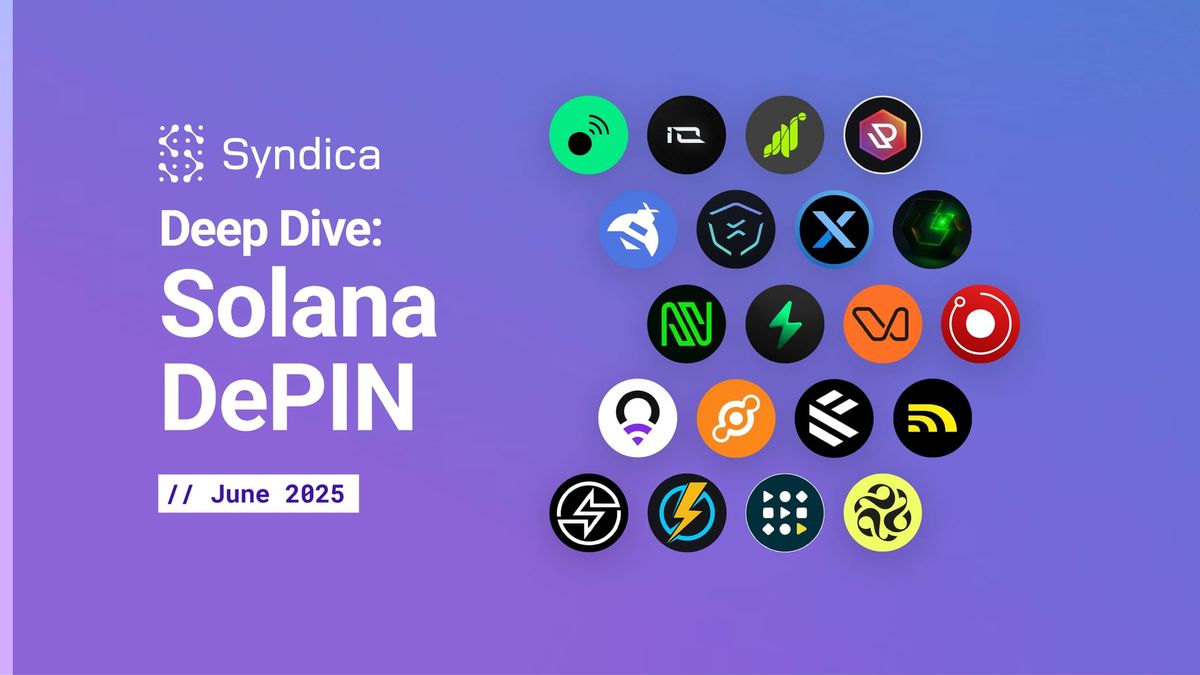
Solana DePIN 2026 projects are building the physical backbone for decentralized AI. These networks connect idle consumer hardware to AI workloads, creating a distributed alternative to centralized cloud providers. By leveraging Solana’s high throughput and low fees, protocols can micropay node operators for GPU compute, storage, and bandwidth in real time.
The architecture relies on smart contracts to verify work. When an AI agent requests training data or inference processing, the protocol matches the task with available hardware. Solana’s speed ensures that payments settle instantly, removing the friction that often stalls decentralized computing markets. This structure allows small hardware owners to compete with large data centers.
Projects like io.net have positioned Solana as the settlement layer for DePIN. The network’s ability to handle thousands of transactions per second makes it suitable for the high-frequency interactions required by autonomous AI agents. As AI models grow larger, the demand for distributed compute will outpace traditional infrastructure, making these decentralized networks increasingly relevant.
This shift creates a new market dynamic. Instead of relying on a single vendor, AI developers can source compute from a global pool of nodes. The combination of Solana’s infrastructure and decentralized hardware ownership offers a scalable path for the next generation of AI applications.
You Own the Hardware in Solana DePIN 2026
DePIN flips the script on traditional cloud computing. Instead of renting server space from a centralized provider, you deploy your own physical devices—GPUs, hotspots, or storage drives—and earn rewards for contributing that capacity to the network. This model transforms your idle hardware into an income-generating asset.
In the Solana DePIN 2026 landscape, this user-centric approach is the core mechanic. Projects verify your work on-chain and distribute tokens automatically. You retain full ownership of the physical equipment, deciding when to sell, upgrade, or repurpose it, free from the lock-in contracts typical of centralized infrastructure.
This shift reduces reliance on large tech monopolies. By distributing hardware ownership across thousands of individuals, the network becomes more resilient and less prone to single points of failure. You are not just a user; you are a node operator building the backbone of the next internet.
Common Questions About Solana DePIN 2026
These questions address the core mechanics and current status of Solana DePIN 2026. For the latest technical upgrades and protocol-specific details, refer to the official Solana blog and recent ecosystem reports.
Helpful gear
Use these product recommendations as a starting point, then choose the size, material, and price point that fit how you actually use the gear.


As an Amazon Associate, we may earn from qualifying purchases.
No comments yet. Be the first to share your thoughts!