
The constraint: why Solana is the only chain for AI agents
Solana’s high throughput and low fees are not just marketing metrics; they are the operational requirements for AI agents to function economically. An AI agent executing thousands of micro-interactions per day cannot survive on networks with high gas costs or slow finality. Solana provides the necessary infrastructure for these autonomous programs to transact, monitor activity, and interact with smart contracts in real-time.
The primary constraint for AI on Solana is not the blockchain’s capability, but the integration of off-chain intelligence with on-chain execution. Agents need reliable access to compute, data oracles, and seamless wallet management. Solana addresses this through specialized tools like Solana MCP, which integrates directly into AI-supported IDEs like Cursor and Windsurf, allowing developers to code agents that understand blockchain context natively.
This environment has led to a surge in autonomous projects. Agents like elizaOS, Goatseus Maximus, and Virtuals Protocol are not just concepts; they are live programs leveraging Solana’s speed to perform complex tasks. The chain’s ability to handle high-frequency transactions makes it the preferred layer for AI agents that need to react to market data or execute trades faster than humanly possible.
Solana ai agent choices that change the plan
Choosing an AI agent on Solana requires balancing autonomy, cost, and control. Unlike traditional crypto bots that follow rigid scripts, these agents use large language models to interpret intent and execute transactions. This flexibility introduces unique tradeoffs that developers and users must evaluate before deployment.
The primary decision involves selecting the right infrastructure layer. You can build custom agents using open-source toolkits like Solana Agent Kit, which supports over 60 actions across DeFi and NFT protocols. Alternatively, you might leverage specialized IDE integrations like Solana MCP for development assistance. Each approach offers different levels of customization versus ease of use.
Autonomy comes with risk. Agents that operate with minimal human oversight can execute complex multi-step transactions instantly, but they are also vulnerable to prompt injection or misinterpretation of ambiguous instructions. High-frequency trading agents require robust error-handling mechanisms to prevent catastrophic losses from model hallucinations. Simpler agents with strict guardrails offer safety but sacrifice the flexibility needed for complex DeFi strategies.
Cost efficiency is another critical factor. While Solana’s low transaction fees make micro-transactions viable for AI agents, compute costs for running the underlying models can add up. Agents that rely on on-chain reasoning will incur higher gas costs compared to off-chain reasoning with on-chain execution. Understanding this split is essential for maintaining profitability in agent-driven strategies.
| Agent Type | Control Level | Primary Cost | Key Risk |
|---|---|---|---|
| Custom Toolkit | High | Compute + Gas | Prompt Injection |
| SaaS Platform | Low | Subscription + Gas | Vendor Lock-in |
| Hybrid Model | Medium | Split Compute | Latency |
| MCP Integrated | Medium | Dev Time | IDE Dependency |
The network’s growing adoption of agent-initiated transactions, now exceeding 15 million, suggests that infrastructure for managing these tradeoffs is maturing. However, there is no one-size-fits-all solution. The best choice depends on whether your priority is rapid deployment, maximum autonomy, or strict security controls.
How to pick the right Solana AI agent
Building or buying an AI agent on Solana requires matching the tool to your specific goal. The ecosystem has split into distinct categories: autonomous social operators, on-chain financial bots, and developer infrastructure. Using the wrong category for your needs leads to wasted capital or broken workflows.
Here is the practical framework to evaluate which agent fits your 2026 strategy.
Start by identifying if you need social engagement, financial execution, or development support. Social agents like Virtuals Protocol (VIRTUAL) or Goatseus Maximus (GOAT) focus on community growth and meme coin trends. Financial agents, such as those built on AI Rig Complex (RIG), handle automated trading or liquidity provision. Developer tools like Solana MCP assist with coding and smart contract auditing. Mixing these functions often results in unstable or inefficient agents.
Not all agents operate independently. Some require constant human oversight, while others run on full autonomy using machine learning models. Autonomous agents on Solana can execute transactions and monitor blockchain activity without manual intervention. However, this speed increases risk. If you are managing significant capital, prefer agents with built-in safety governors or multi-signature requirements. For social experiments, higher autonomy allows for faster iteration.
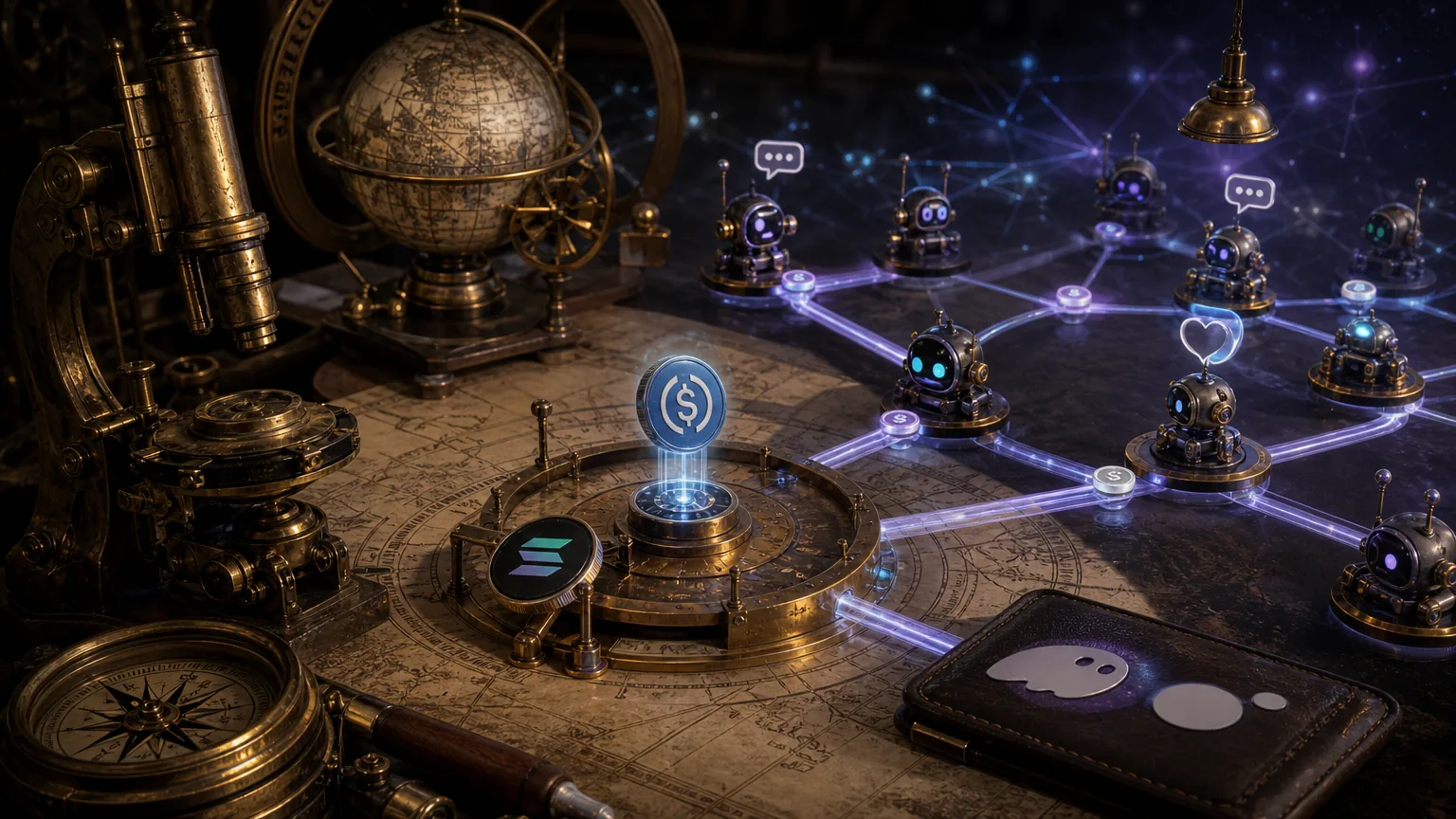
The reliability of an agent depends on its data inputs and compute resources. Solana AI agents leverage natural language processing to interact with smart contracts, but they are only as good as their training data. Look for agents that source data from verified on-chain metrics rather than unverified social sentiment. Official Solana solutions provide the necessary compute and data sourcing layers to ensure agents don't hallucinate trades or misinterpret contract states.
Before deploying an agent with substantial capital, run it in a testnet environment or with minimal funds. This step reveals latency issues, gas estimation errors, or logic flaws in the agent's decision-making process. Solana's high throughput allows for rapid testing, but it also means errors compound quickly. Use this phase to fine-tune the agent's parameters and ensure it behaves as expected under market stress.
| Agent Type | Best For | Risk Level |
|---|---|---|
| Social Agents | Community growth & memes | High |
| Financial Agents | Automated trading | Medium-High |
| Dev Tools | Coding & auditing | Low |
Spotting Weak Options in the AI Agent Space
The rush to launch AI agents on Solana has created noise alongside innovation. Not every project offering "autonomous intelligence" delivers functional utility. Many rely on vague whitepapers or copy-pasted codebases that fail under pressure. Before committing capital or attention, you need to distinguish between robust infrastructure and speculative vaporware.
1. Check for On-Chain Autonomy
A legitimate agent must execute transactions independently, not just simulate them in a demo video. Look for projects like elizaOS or Virtuals Protocol that have deployed smart contracts interacting with DePIN resources or executing trades without manual intervention. If the agent only exists in a Discord bot or a GitHub repo with no on-chain history, it is likely a weak option.
2. Verify Compute and Data Sources
AI agents require massive computational power and reliable data feeds. Weak projects often claim to use Solana's speed but rely on centralized servers for their core logic. Stronger options, such as those integrating with Solana's decentralized compute marketplaces, ensure that the agent's decisions are driven by verifiable, on-chain data. If the data source is opaque, the agent's actions are untrustworthy.
3. Assess Community and Developer Activity
The "big 4" agents often cited in 2026—elizaOS, Goatseus Maximus, Zerebro, and Virtuals Protocol—share high developer engagement. Check their GitHub repositories for recent commits and active contributors. A project with a dormant codebase or a community focused solely on price speculation, rather than technical development, is a red flag. Prioritize projects where the community tests features and reports bugs.
4. Review Tokenomics and Incentive Alignment
Many AI agent projects suffer from misaligned incentives. If the token price is decoupled from the agent's actual usage or revenue generation, the project is vulnerable to a sharp correction. Look for models where token holders benefit from the agent's success, such as through fee sharing or governance rights. Avoid projects that rely solely on inflationary rewards to maintain activity.
Solana AI agents: practical questions answered
Before committing capital or code to the Solana AI narrative, it helps to separate the infrastructure from the hype. The ecosystem is maturing from experimental prototypes to autonomous, on-chain actors. Below are the most common questions developers and investors ask about this shift.
No comments yet. Be the first to share your thoughts!