Solana’s rapid ascent in the blockchain ecosystem has been fueled by relentless innovation, but security and decentralization have always remained at the forefront of its evolutionary roadmap. The recent adoption of SIMD-0326 (Alpenglow consensus) and the upcoming SIMD-0357 proposal are not just technical upgrades, they are paradigm shifts for validator security and network performance. As of today, with Binance-Peg SOL (SOL) trading at $201.33, these changes are setting new standards for how a high-throughput, decentralized blockchain can operate securely at scale.
The Need for Change: From TowerBFT to Alpenglow
Solana’s previous consensus protocol, TowerBFT, combined with Proof-of-History (PoH), allowed the network to achieve impressive throughput. However, as user demand grew and security threats evolved, limitations became apparent, specifically in finality times and resilience against adversarial validators. The move to Alpenglow was driven by these constraints, as detailed in the Solana Developer Forums. The new protocol replaces legacy mechanisms with a direct-vote engine called Votor, which is designed to reduce block finalization from 12.8 seconds to an astonishing 100,150 milliseconds. This is not just an incremental improvement but a leap that positions Solana alongside traditional payment networks in terms of speed.
"Patience and research build wealth. " - Marcus Shelton
Validator Security: The "20 and 20" Resilience Model
A standout feature of Alpenglow epochs is the "20 and 20" resilience model. In essence, Solana can now withstand up to 20% of validators acting maliciously while tolerating an additional 20% being offline or unresponsive. This dual-fault tolerance represents a significant upgrade over previous models that typically focused on either adversarial or unresponsive nodes, not both simultaneously.
Key Advantages of "20 and 20" Resilience for Solana Validators
- Enhanced Fault Tolerance: The "20 and 20" resilience model allows Solana to remain fully operational even if up to 20% of validators are adversarial and another 20% are unresponsive. This significantly increases the network's ability to withstand coordinated attacks or outages, ensuring continuous block production and transaction processing.
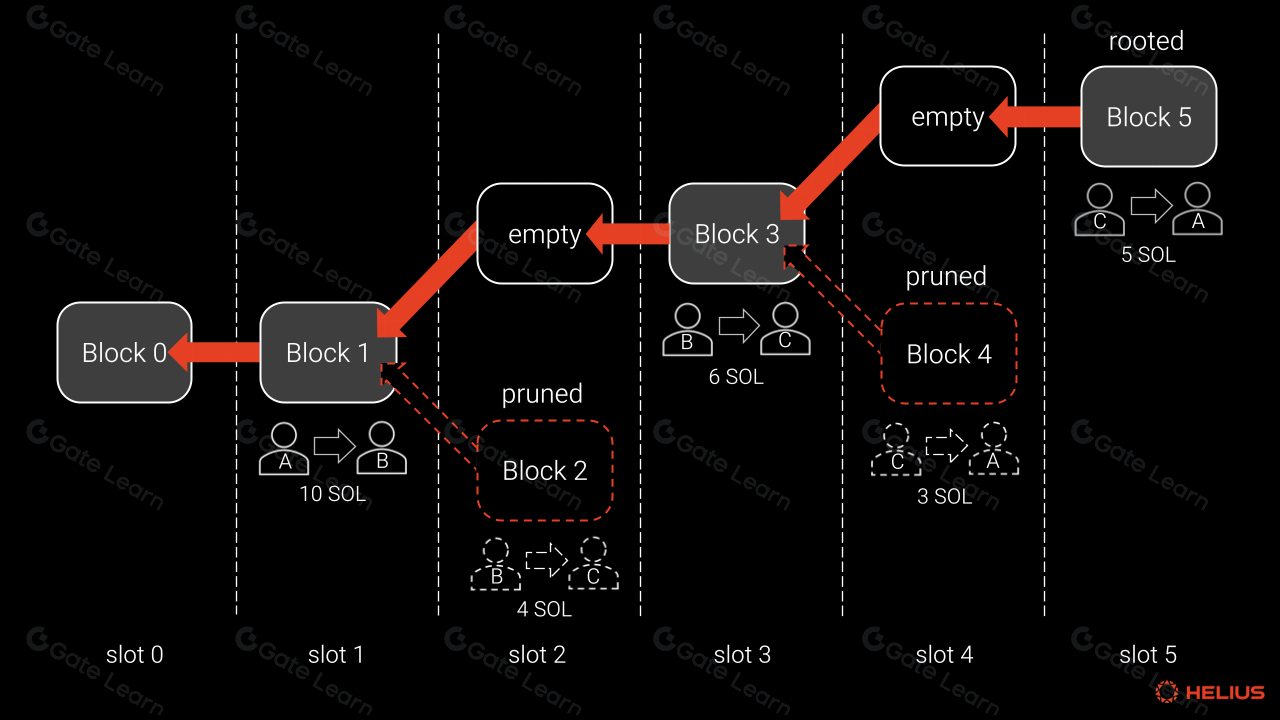
- Improved Security Against Adversarial Actions: By tolerating a high proportion of faulty or malicious validators, Solana's consensus protocol under Alpenglow (SIMD-0326) raises the threshold for successful attacks, making it far more difficult for bad actors to compromise network integrity.
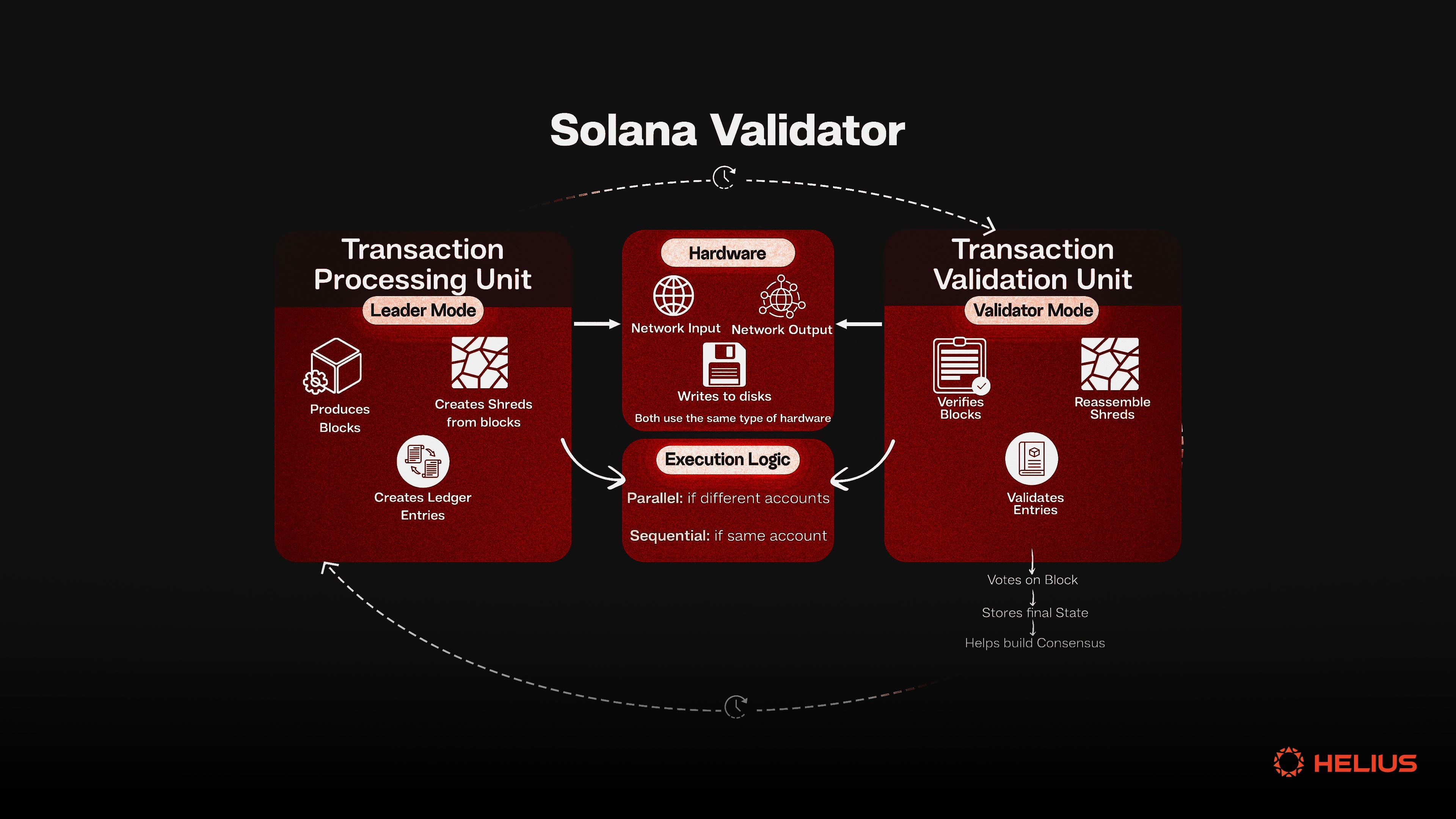
- Greater Network Liveness: The model ensures that the network can maintain liveness and finality even in the face of widespread validator downtime or network partitions, reducing the risk of stalls that could disrupt users and dApps.
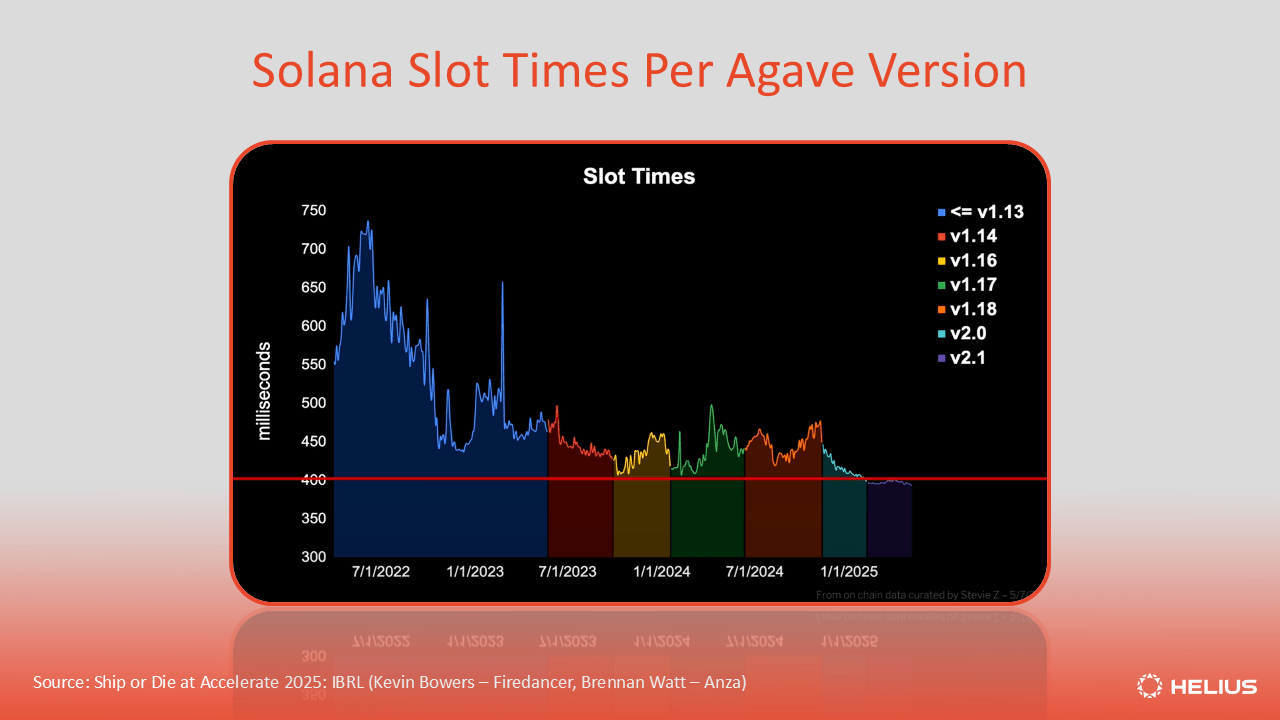
- Decentralization with High Performance: The "20 and 20" resilience supports sub-second finality (as low as 150ms) while maintaining decentralization, aligning Solana's performance with Web2 standards without sacrificing security or validator diversity.
- Community Confidence and Adoption: The overwhelming 99.60% validator approval for the Alpenglow upgrade demonstrates strong community trust in the resilience model, encouraging further participation and investment in the network.
This model directly addresses concerns about network liveness and safety during turbulent periods or targeted attacks. For long-term investors and node operators alike, this means increased confidence in network uptime and integrity, critical factors as Solana aims to support everything from DeFi protocols to enterprise-scale applications.
SIMD-0357: Validator Admission Ticket (VAT) System Explained
The introduction of SIMD-0357 further tightens validator security through economic incentives. Under this proposal, authored by Wen Xu and @TheWattenhofer, the Validator Admission Ticket (VAT) system requires each validator to pay a fixed fee per epoch (currently set at 1.6 SOL). This fee is non-refundable and burned rather than distributed as rewards, helping offset inflation while ensuring that only committed participants operate validators.
This approach achieves two goals: it deters sybil attacks by raising the cost of entry for potential bad actors and aligns validator incentives with long-term network health. By burning admission fees instead of redistributing them, Solana reduces economic bloat while maintaining decentralization, a delicate balance few blockchains have achieved at this scale.
Off-Chain Voting: Efficiency Meets Security
Another cornerstone of Alpenglow is its off-chain voting mechanism. Instead of submitting every vote transaction on-chain, a bandwidth-intensive process, validators now exchange votes directly using cryptographic aggregation schemes. This reduces on-chain congestion while preserving verifiability through aggregated proofs.
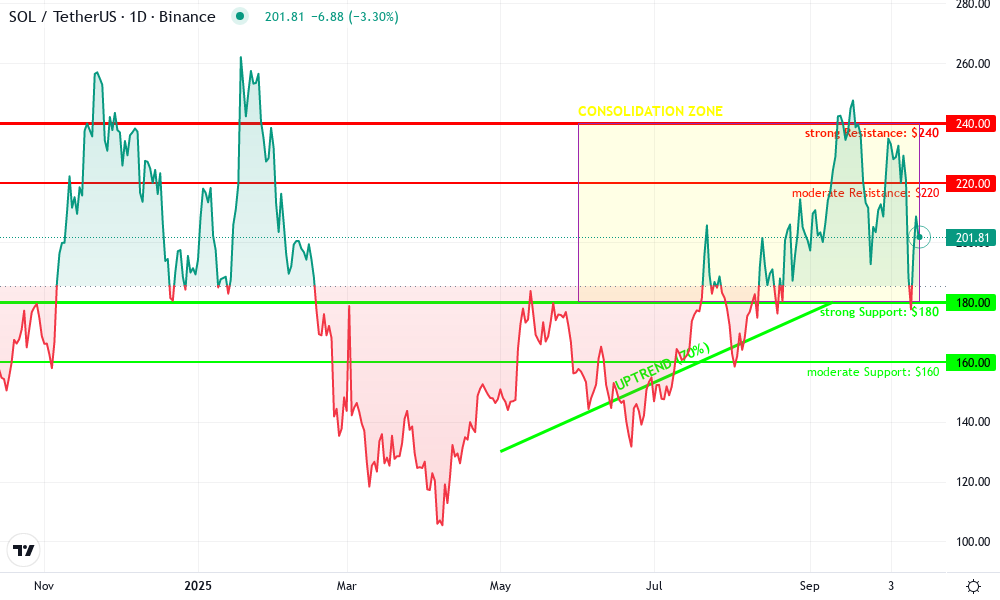
Solana Technical Analysis Chart
Analysis by Marcus Shelton | Symbol: BINANCE:SOLUSDT | Interval: 1D | Drawings: 6
Technical Analysis Summary
On this daily chart for Solana (SOLUSDT), I recommend marking a strong horizontal support around $180 and resistance around $240. Draw a moderate uptrend line from the May 2025 low near $130 through higher lows to September 2025. Use rectangles to highlight consolidation zones around $180-$200 and $220-$240. Indicate recent price rejection above $240 and bounce from $180. Use callouts to annotate the Alpenglow upgrade in early September 2025. Overlay volume and MACD if available for confirmation, but as a fundamentally driven analyst, focus on long-term zones.
Tags
Related Articles
Solana PvP Games Thriving on Ultra-Low Fees for In-Game Trades 2026
Solana's ultra-low transaction fees, often under $0.001, have unlocked unprecedented potential for PvP games in 2026. At a current price of $93.36 with a 24-hour gain of and $4.83, SOL underpins real-time in-game trades of NFTs and tokens...
Mar 16, 2026
Top Solana DEX Leaderboard 2026: Humidifi Beats Pump.fun and Orca in 24H Volume
In the volatile world of Solana DeFi, Humidifi has just rewritten the rules. As of February 11,2026, this powerhouse DEX has surged ahead of Pump. fun and Orca, claiming the number one spot on the Solana DEX leaderboard 2026 with unmatched...
Feb 11, 2026
Play Solana PSG1: Solana's First Dedicated Web3 Gaming Console Explained
Picture this: you're gripping a sleek handheld device that doesn't just crush Solana games 2026 but also safeguards your NFTs and tokens with military-grade security. Enter the Play Solana PSG1, Solana's first dedicated Web3 gaming...
Feb 8, 2026
Solana Gaming Supercycle 2026: Arise Cross The Ages, Jail.fun, GORECATS, Cashcitydotfun Launches Explained
Solana's gaming sector stands at the cusp of a transformative 2026 supercycle , propelled by high-profile launches including Arise Cross The Ages, Jail. fun, GORECATS, and Cashcitydotfun. As Binance-Peg SOL holds steady at $126.04 with a...
Jan 25, 2026
No comments yet. Be the first to share your thoughts!