
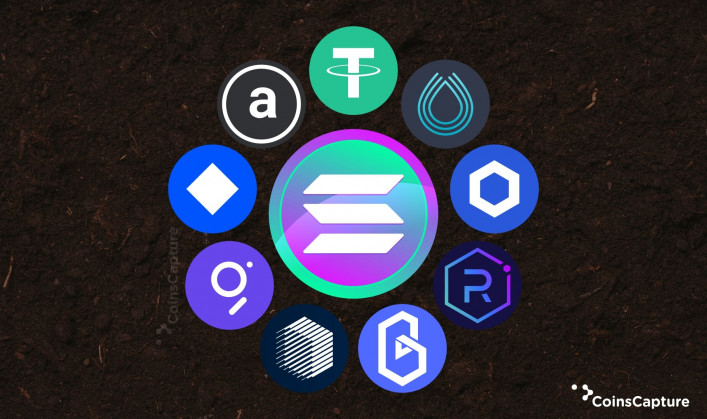
Solana DeFi 2026 landscape
Solana has transformed from a high-throughput experiment into the primary infrastructure for institutional DeFi. The 2026 roadmap explicitly shifts focus away from raw TPS metrics toward predictable finality, execution integrity, and system resilience. This maturation allows protocols like Kamino, Jupiter, and Raydium to operate with the reliability required for serious capital deployment.
Institutions now treat the network as hardened infrastructure, ensuring that high-volume operations remain stable under pressure.The ecosystem’s depth is anchored by dominant protocols that handle the bulk of on-chain activity. Kamino leads the lending sector with $1.48 billion in total value locked across isolated markets for assets like USDC, USDT, and SOL. This concentration of liquidity provides the stability needed for large-scale trading and arbitrage. Meanwhile, Jupiter and Raydium continue to dominateDEX volume, offering the deep liquidity pools necessary for executing complex strategies without slippage.
This structural maturity is visible in the broader ecosystem growth. Recent ecosystem roundups highlight a surge in institutional adoption and the integration of tokenized real-world assets alongside stablecoins. Solana DeFi 2026 is no longer just about speed; it is about building a predictable, fair, and resilient financial layer. The combination of robust protocol foundations and institutional-grade reliability positions Solana as the leading choice for serious DeFi participants.
Top lending and staking protocols
Institutional capital flows into Solana DeFi 2026 through protocols that prioritize predictable finality and execution integrity. The market has consolidated around a few key players that handle the heavy lifting of passive yield generation. Rather than chasing speculative rewards, these platforms offer the reliability required for serious portfolio management.
Kamino Finance leads the lending sector as the largest single DeFi protocol on the network. Its K-Lend market layer, introduced with Kamino 2.0, currently holds $1.48 billion in total value locked across isolated lending pools. These markets support major assets including SOL, USDC, USDT, JUP, and PYUSD, providing a deep liquidity foundation for borrowers and lenders alike.
For staking, Sanctum and Jito dominate the liquid staking landscape. Sanctum’s Liquid Staking Derivatives (LSDs) allow staked SOL to remain functional within DeFi applications, while Jito’s MEV rewards boost native staking yields. Together, these protocols form the infrastructure backbone for Solana DeFi 2026, ensuring that passive yield generation remains both secure and efficient.
| Protocol | Type | TVL | Primary Focus |
|---|---|---|---|
| Kamino Finance | Lending | $1.48B | Isolated lending markets |
| Sanctum | Liquid Staking | N/A | LSD interoperability |
| Jito | Liquid Staking | N/A | MEV reward distribution |
Best DEXs and aggregators
Liquidity on Solana is fragmented across specialized venues, making the choice of execution layer critical for institutional-grade reliability. In 2026, traders rely on a dual-engine approach: Jupiter acts as the primary routing layer for price discovery, while Raydium provides the concentrated liquidity backbone for direct market making.
Jupiter dominates as the aggregator, scanning over a dozen DEXs and AMMs to find the best execution path. Its MEV-protected routing ensures that large orders do not suffer from front-running, a standard requirement for high-stakes trading environments. By consolidating liquidity, Jupiter reduces slippage and guarantees that the quoted price holds until finality.
Raydium complements this by offering the active liquidity pools where Jupiter sources its depth. Its AMM mechanics allow for concentrated positions, providing tighter spreads for major pairs like SOL/USDC. This synergy creates a resilient infrastructure where Jupiter handles the complexity of routing, and Raydium handles the capital efficiency of the order book.
| Protocol | Primary Function | Liquidity Model | Institutional Feature |
|---|---|---|---|
| Jupiter | Aggregator | Multi-DEX Routing | MEV Protection |
| Raydium | AMM | Concentrated Liquidity | High Capital Efficiency |
The integration of these tools allows traders to access deep order books without managing multiple interfaces. This unified access is essential for maintaining operational security and execution speed in a high-throughput environment.


As an Amazon Associate, we may earn from qualifying purchases.
Emerging AI and Gaming tokens
The convergence of AI and gaming with Solana’s DeFi infrastructure marks a significant shift in how decentralized applications handle computation and asset liquidity. As the 2026 roadmap prioritizes execution integrity and predictable finality, protocols bridging these sectors are moving from experimental stages to institutional-grade reliability.
Projects like Render Network and AIC are leveraging Solana’s high throughput to manage real-time data streams for AI training and gaming assets. Unlike traditional chains that struggle with latency, Solana’s architecture allows these protocols to process complex computational tasks without the bottlenecks that previously hindered scalability. This reliability is critical for institutions seeking to deploy capital in sectors where downtime or lag translates directly to financial loss.
Gaming-focused DeFi protocols are integrating with established liquidity hubs like Kamino and Jupiter to ensure seamless asset swapping and lending. By anchoring gaming tokens to robust lending markets, these projects reduce counterparty risk and provide the deep liquidity necessary for high-stakes trading environments. This integration ensures that AI and gaming tokens are not isolated experiments but integral components of Solana’s broader DeFi ecosystem, supported by the same security standards as major financial instruments.
No comments yet. Be the first to share your thoughts!