
The Firedancer Mainnet Reality
Jump Crypto’s Firedancer validator client is now quietly producing blocks on Solana mainnet, marking a significant turning point in the network's infrastructure evolution. However, this launch is not the explosive, all-at-once deployment often portrayed in early speculation. Instead, it represents a deliberate, phased integration designed to ensure stability before scaling. This "slow and steady" approach prioritizes network integrity over immediate hype, aligning with Solana's 2026 roadmap for predictable finality and execution integrity.
While early benchmarks and testnet simulations suggested theoretical throughput capacities approaching one million transactions per second (TPS), the live mainnet environment operates under different constraints. The current baseline performance reflects a gradual rollout where Firedancer runs alongside the existing validator client. This dual-client setup allows for rigorous real-world stress testing without risking network stability. The focus remains on validating the independent client's ability to handle high-frequency trading volumes and DeFi interactions reliably.
For market participants, this distinction between theoretical potential and current operational reality is critical. The immediate impact on Solana's price action and DeFi liquidity is nuanced, driven more by confidence in infrastructure resilience than by instant throughput jumps. As Jump Crypto and Anza continue to expand Firedancer's footprint, the network is building toward a more robust, multi-client ecosystem. This gradual expansion is essential for supporting the institutional-grade capital markets Solana aims to host.
To contextualize this infrastructure shift within the broader market, it is helpful to observe Solana's recent price volatility and trading volume. The following chart illustrates the current market sentiment surrounding SOL/USD, reflecting how traders are pricing in these foundational changes.
Why Firedancer Matters Structurally
Firedancer is not a fork of the existing Solana codebase; it is a complete rewrite of the validator client in C and C++, replacing the current Rust-based Agave client. This distinction is critical for financial infrastructure. By introducing a second, independent validator client, Solana creates a structural hedge against single-point-of-failure bugs. If a critical vulnerability exists in the Rust implementation, operators running Firedancer remain unaffected, ensuring the network continues to process transactions without halting for a global patch.
The technical divergence allows for independent verification of the protocol. Agave, developed primarily by Anza, and Firedancer, built by Jump Crypto, execute the same Solana protocol rules but through entirely different logic paths. This redundancy is the gold standard for high-stakes financial systems, where code integrity is as important as capital security. It moves Solana away from a monolithic dependency toward a more resilient, multi-client ecosystem.
The rollout remains cautious. Rather than a rapid, disruptive swap, the strategy emphasizes slow integration and rigorous testing. This approach prioritizes stability over speed, acknowledging that in high-frequency trading and DeFi, predictability and execution integrity outweigh the allure of theoretical maximum throughput. The goal is not just faster blocks, but a network that can withstand complex, novel attack vectors without compromising settlement finality.
Throughput Gains and Transaction Costs
Solana’s transition to the Firedancer validator client represents a structural shift in network capacity, moving beyond the current operational limits of 3,000–5,000 real-world transactions per second (TPS). According to developer estimates from Jump Crypto and Anza, the new client is projected to push sustained throughput toward 10,000+ TPS by mid-2026. This doubling of capacity is not merely a theoretical benchmark; it addresses the persistent congestion that has occasionally disrupted DeFi operations during peak market hours.
The primary economic benefit of this upgrade is a significant reduction in transaction costs. Currently, the average cost per transaction hovers around $0.00025. While this is already low compared to legacy networks, Firedancer’s optimized block production and reduced latency are expected to drive these costs even lower. For high-frequency trading protocols and micro-transaction applications, this marginal cost reduction compounds into substantial savings, improving the unit economics of on-chain activities.
| Metric | Current Solana (v1.18) | Projected (Firedancer) |
|---|---|---|
| Sustained TPS | 3,000–5,000 | 10,000+ |
| Avg. Transaction Cost | ~$0.00025 | Lower |
| Latency | Variable under load | Optimized |
| Validator Diversity | Single client (main) | Dual-client redundancy |
This performance upgrade is critical for institutional adoption, as it provides the predictable finality and execution integrity required by traditional finance. By mitigating the risk of network congestion, Firedancer allows DeFi protocols to operate with greater confidence, knowing that transaction failures due to network saturation will become increasingly rare. The rollout remains cautious, with gradual integration to ensure stability before full-scale deployment across the validator network.
Impact on Solana DeFi and NFT Markets
Firedancer’s arrival shifts Solana’s value proposition from raw throughput to institutional-grade reliability. For DeFi protocols, the primary benefit is not just speed, but predictable latency and reduced transaction costs. This stability lowers the barrier for high-frequency trading bots and complex financial instruments that previously struggled with network congestion during peak hours.
Lower fees enable micro-transactions that were previously economically unviable. While Solana already offered cheap transactions, Firedancer’s efficiency gains allow for granular on-chain activities, such as real-time asset rebalancing or high-volume NFT minting, without the cost spikes associated with legacy validator clients. This efficiency supports a shift toward more frequent, smaller-value interactions, expanding the utility of Solana for everyday financial applications.
The rollout remains cautious. Jump Crypto and Anza are prioritizing security and stability over aggressive feature expansion. This "slow and steady" approach ensures that the network can handle increased load without compromising the integrity of existing DeFi positions. For NFT markets, this means fewer failed transactions and a more consistent user experience, which is critical for maintaining collector confidence.
As the validator client matures, we expect to see a gradual migration of protocols that require deterministic execution. The focus is on building a robust foundation for long-term growth rather than chasing short-term hype. This measured progression positions Solana to compete more effectively with traditional financial infrastructure, offering a blend of speed, cost-efficiency, and reliability.
Risks and the Gradual Rollout
The introduction of Firedancer to the Solana mainnet is not a sudden replacement but a gradual integration designed to mitigate systemic risk. Jump Crypto has adopted a "slow and steady" approach, allowing the new validator client to produce blocks quietly while the network continues to operate on the existing infrastructure. This phased rollout ensures that any potential bugs in the new codebase are identified and resolved in a controlled environment before widespread adoption.
This cautious strategy is critical for a network handling high-value DeFi transactions. By prioritizing stability over speed of deployment, the developers aim to prevent the kind of outages that have historically plagued Solana. The focus is on verifying the client's ability to maintain consistent performance under load, rather than simply achieving peak theoretical throughput. This methodical pace allows validators to test the new client's compatibility with their existing setups without disrupting network operations.
Full network adoption will take time, as thousands of independent validators must update their software and undergo rigorous testing. The transition period is an opportunity to identify edge cases and optimize performance metrics. While the potential for increased transaction capacity is significant, the immediate priority is ensuring that the network remains secure and reliable. Investors and users should expect a gradual increase in Firedancer's presence on the network, rather than an immediate shift.
Solana 2026 Roadmap and Investor Checklist
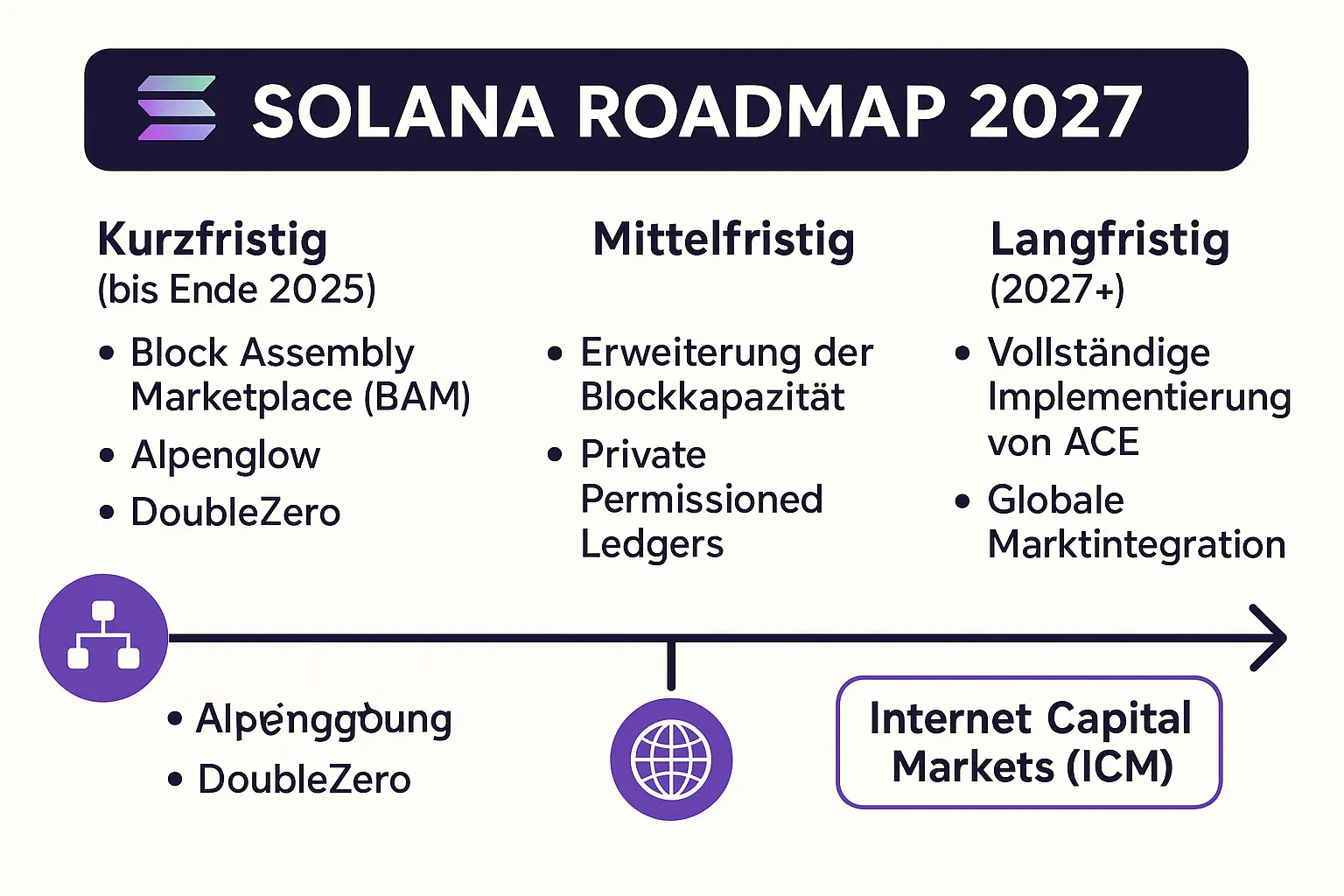
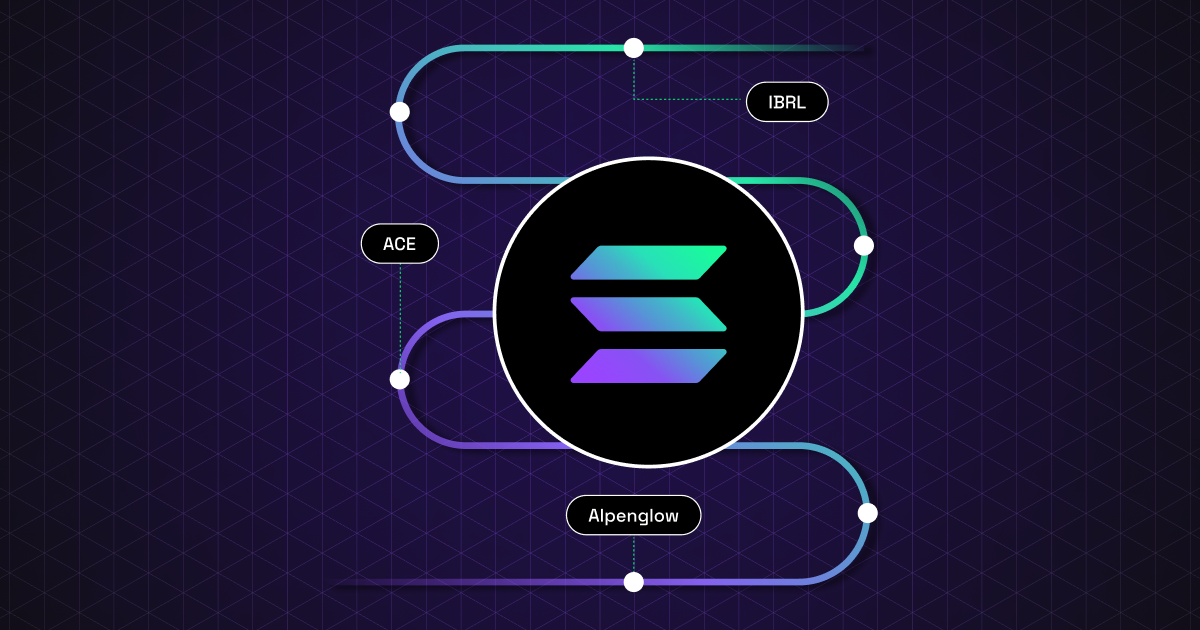
Solana’s 2026 technical roadmap prioritizes predictable finality, execution integrity, and validator client diversity to solidify its position as institutional-grade infrastructure. The integration of Firedancer is central to this strategy, aiming to improve bandwidth and latency while reducing reliance on a single validator client. This diversification is not merely a technical upgrade but a structural hedge against network risk, ensuring the chain remains resilient under high throughput conditions.
Quantum readiness remains a background priority rather than an immediate catalyst. Official reports from Anza and Jump Crypto indicate that while quantum threats are still years away, the protocol is laying the groundwork for post-quantum cryptography. Investors should view this as a long-term insurance policy rather than a near-term price driver. The focus remains on steady, incremental improvements to network stability and cost efficiency.
Evaluating SOL exposure during this transition requires monitoring specific on-chain and validator metrics rather than speculative price targets. The following checklist outlines the critical indicators to track as Firedancer adoption scales.
Track the percentage of validators running Firedancer versus the default client. A balanced distribution reduces single-point-of-failure risks and signals healthy decentralization. Look for consistent growth in Firedancer participation across independent validator operators.
Analyze the frequency and duration of stalling events. Predictable finality is a core 2026 goal; a reduction in block production delays indicates successful Firedancer integration. Use block explorers to measure the time between transaction submission and final confirmation.
Review sustained transactions per second (TPS) during peak congestion periods. The 2026 roadmap emphasizes maintaining low fees under high load. Consistent fee stability, even during network stress, validates the infrastructure upgrades.
Monitor official announcements from Anza and Jump Crypto regarding post-quantum signature schemes. While not an immediate price factor, these updates are critical for long-term institutional adoption. Ensure the network is preparing for future cryptographic standards.
No comments yet. Be the first to share your thoughts!