
Solana DeFi 2026 ecosystem overview
The Solana ecosystem in 2026 has shifted from a high-velocity retail playground to a foundation for institutional-grade infrastructure. While transaction volume remains a headline metric, the real story is the structural shift toward stability and capital efficiency. The network is no longer just about speed; it is about becoming the settlement layer for real-world assets and stable value.
Stablecoin growth has been the primary driver of this maturity. The total stablecoin supply on Solana printed a new all-time high of $16.8 billion, with USDC maintaining a dominant 53% market share. This influx of stable capital has provided the liquidity backbone necessary for deeper DeFi markets, even as other speculative metrics have cooled. The network’s ability to handle this volume without congestion has solidified its position as a preferred chain for large-scale financial operations.
Lending protocols have absorbed this liquidity, with Kamino emerging as the largest single DeFi protocol on Solana by total value locked. Its K-Lend market layer supports isolated lending markets for major assets like SOL, USDC, USDT, JUP, and PYUSD, holding over $1.48 billion in deposits. This concentration of value in robust, audited lending markets signals a move away from yield farming gimmicks toward sustainable, yield-generating financial products.
The broader DeFi landscape has seen some metrics shrink as speculative fervor waned, but the remaining protocols are more resilient. The ecosystem is now defined by a few high-quality, institutional-ready platforms rather than a wide array of fragile, high-yield experiments. This consolidation benefits users by reducing counterparty risk and improving the overall health of the Solana DeFi 2026 landscape.
Top Solana DeFi protocols by category
The Solana DeFi 2026 landscape is defined by three dominant pillars: decentralized exchanges, lending markets, and liquid staking. These protocols handle the bulk of on-chain value, offering the deepest liquidity and most reliable yields. Choosing the right protocol depends on whether you are trading, borrowing, or seeking passive income.
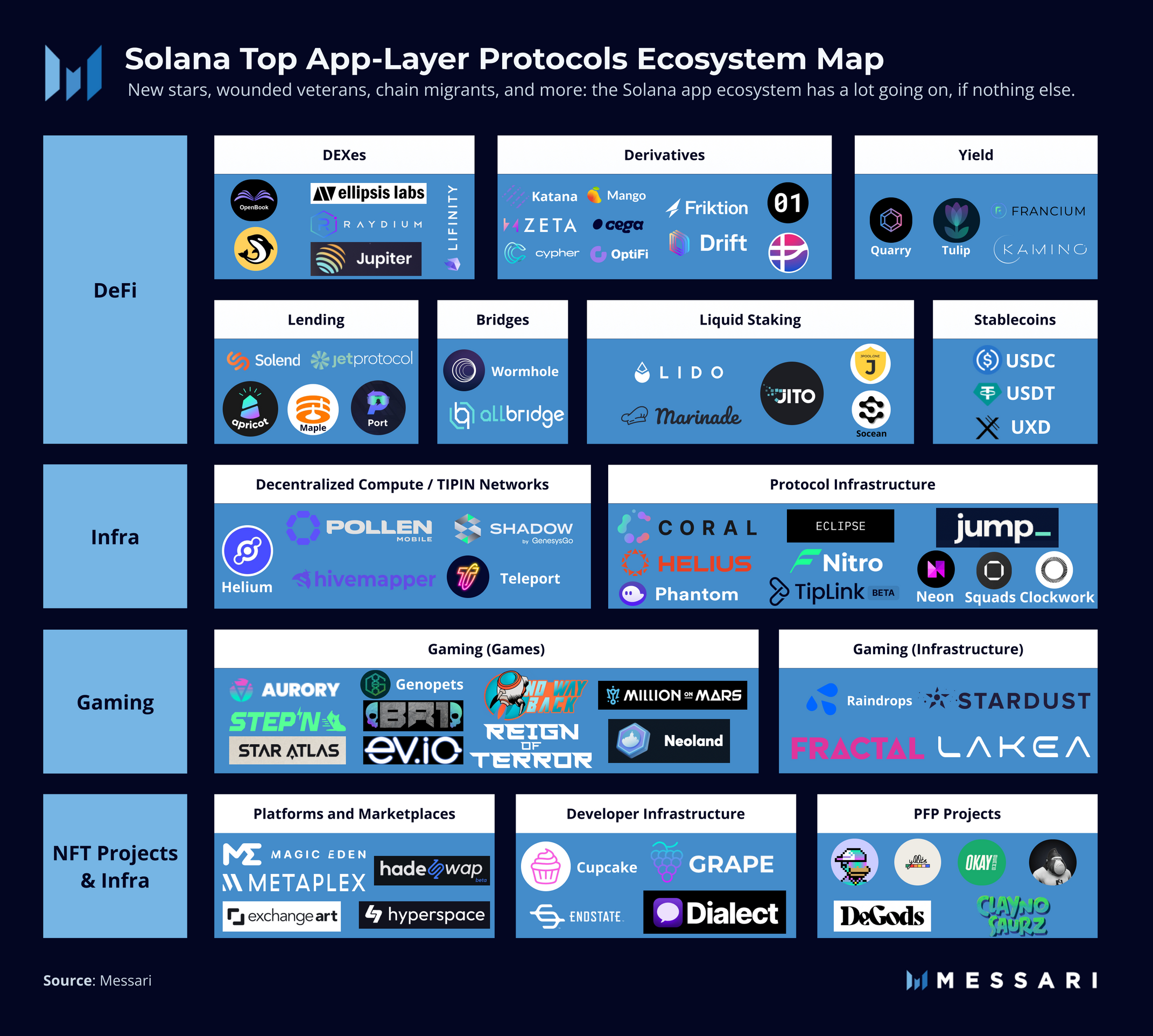
Jupiter and Raydium are the primary gateways for trading on Solana. Jupiter acts as an aggregator, scanning multiple DEXs to find the best price for your swap, while Raydium provides the deep liquidity pools that power many of those trades. For high-volume trading, Jupiter’s route optimization minimizes slippage, making it the default choice for most users.

Kamino has emerged as the largest single DeFi protocol on Solana by total value locked (TVL). Its Kamino Lend market layer supports isolated lending markets for major assets like SOL, USDC, USDT, JUP, and PYUSD. With over $1.48 billion in isolated markets, Kamino offers the most robust borrowing and lending infrastructure, allowing users to earn yield on idle assets or borrow against their holdings.
Marinade Finance leads the liquid staking category, allowing users to stake SOL while retaining liquidity through mSOL tokens. This mechanism lets users earn staking rewards while still participating in other DeFi activities, such as providing liquidity or using mSOL as collateral. Marinade’s deep integration with other Solana protocols makes it a foundational component of the ecosystem’s yield strategy.
To help you compare these top Solana DeFi 2026 options, here is a quick overview of their primary functions and market standing:
| Protocol | Category | Primary Use | TVL Status |
|---|---|---|---|
| Jupiter | DEX | Token Swaps & Aggregation | High |
| Raydium | DEX | Liquidity Pools | High |
| Kamino | Lending | Borrowing & Lending | Largest on Solana |
| Marinade | Liquid Staking | Staked SOL Yield | Leading Liquid Staker |
When navigating the Solana DeFi 2026 ecosystem, prioritize protocols with established track records and high TVL. These metrics indicate stability and user trust, which are critical for managing risk in decentralized finance. Always verify contract addresses and use official links to avoid phishing sites.
Best Solana NFT Marketplaces for Creators
The Solana NFT ecosystem has matured into a high-velocity environment where speed and low fees are the primary advantages over legacy chains. For creators and collectors, the choice of marketplace dictates not just visibility, but the actual cost of doing business. In the landscape of Solana DeFi 2026, three platforms dominate the volume charts, each serving a distinct segment of the market.
Magic Eden: The All-in-One Standard
Magic Eden remains the default destination for most Solana artists launching new projects. Its multi-chain architecture allows creators to manage assets across Solana, Bitcoin, and Polygon from a single dashboard, simplifying the administrative burden. The platform introduced "Creator Labs," a suite of tools that helps artists manage royalties, track secondary sales, and engage with their community directly.
The user experience is polished, with a focus on discovery. New drops are featured prominently on the homepage, offering organic traffic to emerging artists. For collectors, the interface provides detailed analytics on floor prices and holder distribution, which is essential for making informed purchasing decisions in a volatile market.
Tensor: Built for Traders
Tensor was originally designed as a trading terminal for advanced users, but its influence has expanded to become a critical infrastructure layer for the entire Solana NFT market. It pioneered the "bid" system, allowing users to place limit orders on NFTs rather than just buying at the current floor price. This feature has significantly increased market liquidity and efficiency.
For creators, Tensor offers a unique value proposition: its trading volume often exceeds other marketplaces, providing higher potential exposure for established collections. The platform’s focus on speed and data transparency appeals to professional collectors who view NFTs as tradable assets rather than static images. However, the interface can be overwhelming for casual users unfamiliar with order books.
Solana NFTs: Simplicity and Accessibility
Solana NFTs (formerly known as Solanart) occupies a niche focused on simplicity and accessibility. While it may not match the trading volume of Magic Eden or Tensor, it remains a relevant option for creators who prioritize a clean, minimalist interface. The platform is particularly popular among beginners who find the advanced features of other marketplaces unnecessary.
The fee structure is competitive, and the platform supports standard royalty enforcement, which is crucial for creator sustainability. For artists launching their first collection, Solana NFTs offers a low-friction entry point that requires minimal technical knowledge to set up.
| Marketplace | Best For | Key Feature |
|---|---|---|
| Magic Eden | Creators & General Users | Multi-chain support & Creator Labs |
| Tensor | Professional Traders | Limit orders & Bidding |
| Solana NFTs | Beginners | Simple interface & Low barrier to entry |


As an Amazon Associate, we may earn from qualifying purchases.
Solana vs Ethereum gas fees and speed
When comparing Solana DeFi 2026 opportunities to Ethereum, the economic advantage is stark. Solana’s architecture is built for high throughput, resulting in transaction costs that are fractions of a cent. Ethereum, by contrast, often requires users to pay several dollars per transaction during periods of moderate to high network congestion. This cost differential fundamentally changes how small-value transactions and frequent trading strategies function on each chain.
The speed difference is equally significant. Solana processes transactions in seconds with finality, allowing for real-time interactions in decentralized exchanges and lending protocols. Ethereum’s block times and the need for multiple confirmations can introduce latency that frustrates users attempting quick swaps or arbitrage. For DeFi participants, this means capital is deployed and redeployed much faster on Solana, maximizing potential returns while minimizing exposure to market volatility.
| Feature | Solana | Ethereum |
|---|---|---|
| Avg. Transaction Fee | ~$0.00025 | $1.00 - $10.00+ |
| Block Time | ~400 milliseconds | ~12 seconds |
| Daily Transactions | 50M+ | ~1M |
| Finality | < 1 second | ~12+ minutes |
The low cost of entry on Solana makes it accessible for retail investors who might otherwise be priced out of Ethereum’s gas fees. This accessibility has fueled the growth of Solana DeFi 2026 as the center of gravity for new protocols and users seeking efficient, low-friction financial tools. As the ecosystem matures, the focus has shifted from raw speed to predictability and resilience, ensuring that these economic advantages remain stable for long-term adoption.
Frequently asked questions about Solana DeFi
What is the largest DeFi on Solana?
Kamino is the largest single DeFi protocol on Solana by total value locked. Kamino Lend, the core market layer introduced with Kamino 2.0, holds $1.48 billion across isolated lending markets. These markets support major Solana assets including SOL, USDC, USDT, JUP, and PYUSD, making it the central hub for lending and borrowing in the ecosystem source.
Is Solana DeFi 2026 safe to use?
Solana DeFi 2026 operates with significantly improved stability compared to previous years. The network has resolved major congestion issues, and top protocols like Jupiter and Marinade now offer institutional-grade security. However, as with any DeFi platform, users should always verify contract addresses and use hardware wallets to manage risk.
How do I start using Solana DeFi?
To get started, you need a Solana-compatible wallet like Phantom or Solflare, and some SOL to cover transaction fees. Most users begin by swapping tokens on Jupiter, the leading aggregator, or staking SOL through Marinade to earn yield. These platforms provide intuitive interfaces that guide new users through the initial steps of interacting with the Solana blockchain.
No comments yet. Be the first to share your thoughts!